Application goal
Describe the stretch the garment pattern needs: course, wale, or bias, and whether the cloth must recover after repeated wear or after a wet wash.
Start with the fiber or the cloth you already have, then name the recovery question the next sample should answer.
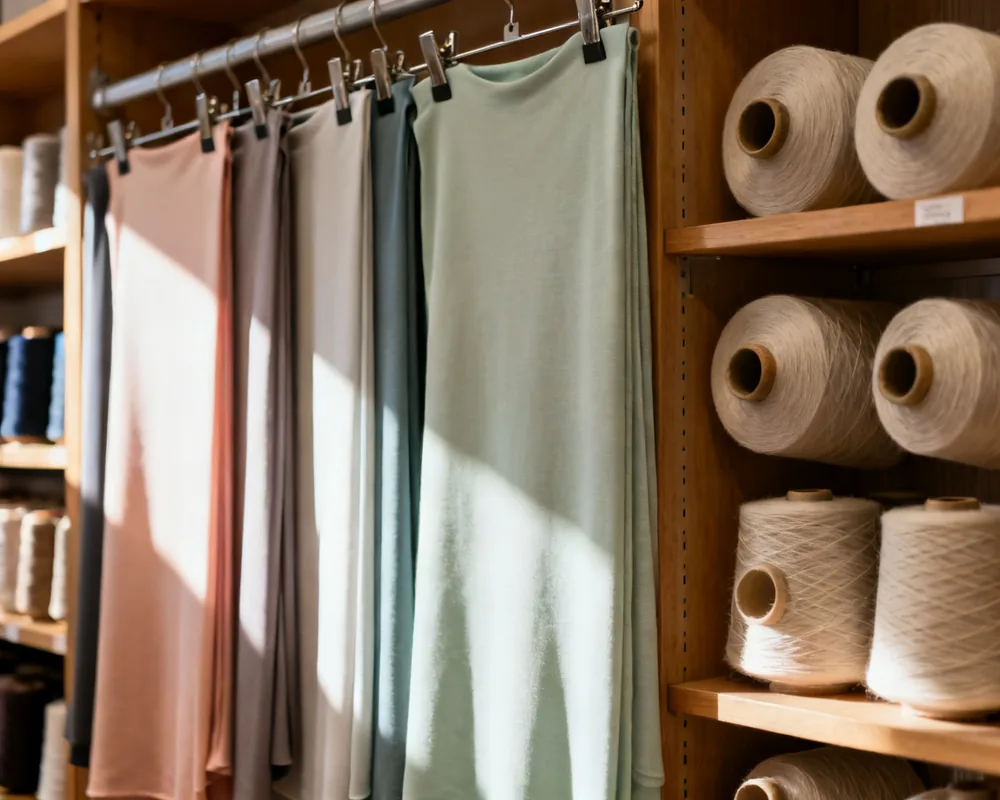
Describe the stretch the garment pattern needs: course, wale, or bias, and whether the cloth must recover after repeated wear or after a wet wash.
Separate bare yarn, covered yarn, and core-spun routes, then note the knit or weave that will carry the elastane.
Agree a dated cutting and the recovery or hand check before anyone treats a target percentage as a result.
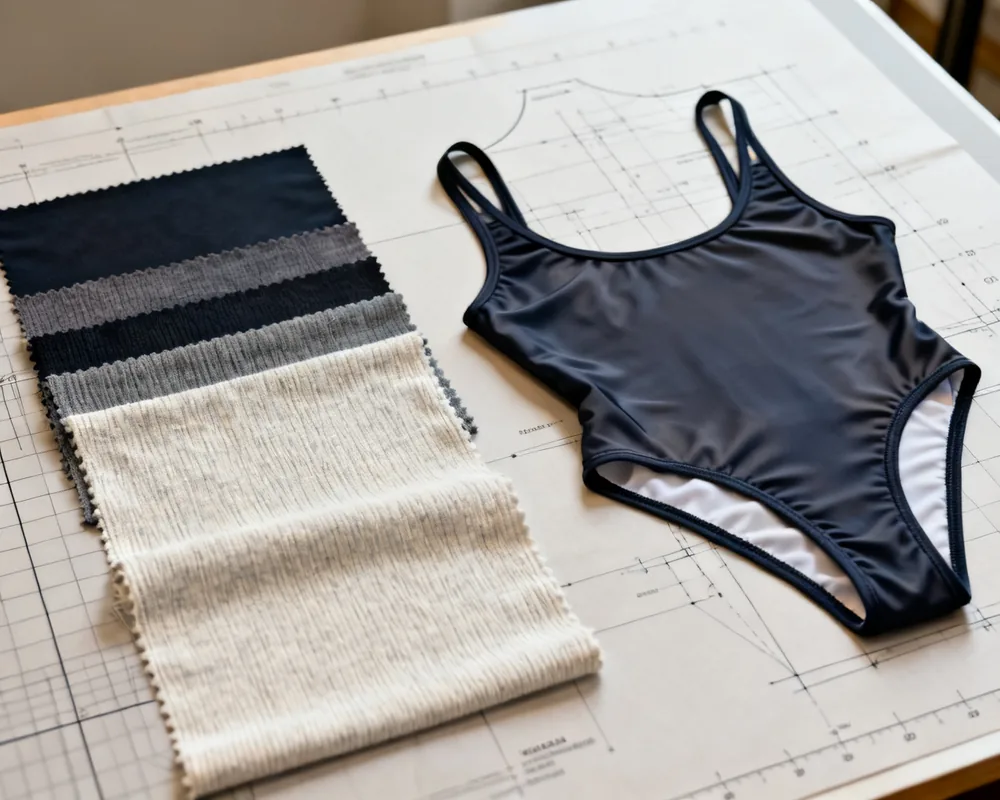
| Material family | Review first | Next step |
|---|---|---|
| Yarns, fibers and threads | Linear density, covering method, and supply format such as cone or package | Browse scope |
| Apparel fabrics | Fiber share, knit or weave, GSM target, usable width, and finish | Discuss suitability |
| Field | Target question | Evidence question |
|---|---|---|
| Composition | Identify the fiber blend, including the elastane share | Review the declaration that matches this construction |
| GSM | Agree a target and a tolerance for the cloth | Confirm the specimen condition and the method |
| Usable width | Separate the cuttable area from the selvedge | Confirm the figure at roll or piece level |
| Finish | Describe any heat-set, dye route, or surface treatment | Check whether the sample state matches the finish under review |
Mass per unit area does not state fiber share, stitch or weave, hand, or stretch recovery. Those belong in separate fields. A cotton-rich knit is usually discussed for hand, moisture against skin, and the wash it will actually receive. A synthetic stretch knit is usually discussed for strength, drying, and how the finish changes the surface. Neither argument is an environmental ranking, and neither replaces a dated cutting.
Give the composition reference, the knit type, usable width, shade, and the wear or wash the cloth must survive.
The names are often used for elastane, but a brief still needs linear density, construction, and the specimen used for stretch recovery. One reading treats the words as the same fiber family. Another keeps them apart until the fiber composition, the denier or dtex, and the label on the declaration match. Water resistance and water vapor transmission are separate topics and are not assumed here. If colorfastness is already in the file, keep AATCC 61 or ISO 105 apart from pilling under ASTM D3512 or ISO 12945-2, and from dimensional stability under AATCC 135 or ISO 5077.
Share the yarn or cloth and the use the pattern has to meet.