LYCRA — A factual profile

This page limits itself to stretch fiber selection and apparel fabric development. It does not describe finished garments, plant output, or an official authorization.
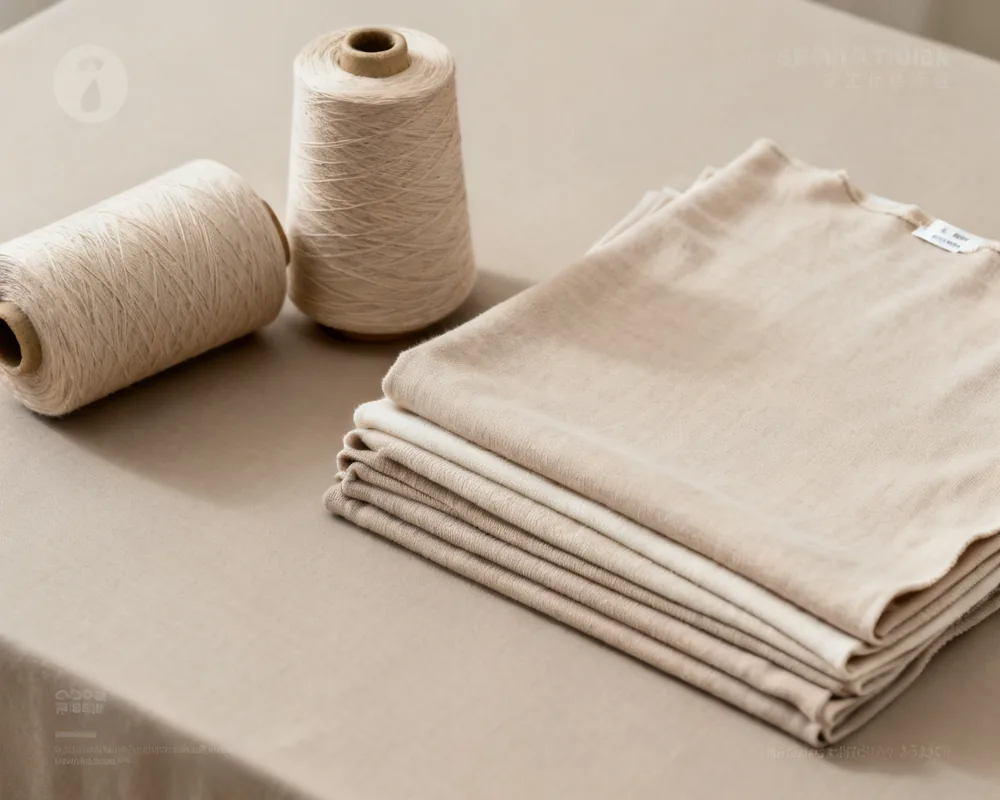
Yarn cones and stretch knit cuttings on a review table

A factual profile

Material scope
The published range is yarns, fibers and threads, together with apparel fabrics used in stretch development. Discussions can cover bare, covered, or core-spun elastane and the knits or wovens that carry it. Finished clothing, furniture, and coated industrial goods are outside this range. A familiar fiber name is a starting label, not a full specification. Linear density, fiber share, construction, GSM, usable width, and finish still have to be written down. Cotton lycra fabric is treated as a blend question: cotton content, elastane content, stitch, and the recovery the pattern needs. Nylon stretch cloth for swim is an application question about knit structure and exposure, not a promise of a named swimwear quality.
Application focus
The working subjects are stretch apparel development and blend or recovery discussion. That includes how a pattern uses course, wale, or bias stretch, and how a cutting is compared after wear or washing. It does not include retail of finished stretch garments. A cotton blend is discussed for hand and moisture against skin. A synthetic companion fiber is discussed for strength, drying, and the finish that can be applied. The brief records that trade-off and does not rank either side as cleaner or stronger in every use. Use conditions such as skin contact, sweat, home laundry, or pool water change which evidence is relevant. Those conditions are questions for the brief. They are not results already measured for every item in a catalogue. If an image shows drape or texture, treat it as a visual cue and confirm hand on a physical sample.
Technical discussion
Ask for the method and the sample context when a recovery, dimensional stability, or colorfastness figure is in play. Name the standard and version if you have them, plus conditioning and the finish state of the specimen. A number copied from a different construction does not travel with the fiber name. Lycra and spandex are often compared in search language. On this desk the useful comparison is composition, denier or dtex, and the specimen, not a slogan that the words are interchangeable in every legal or technical sense. Water resistance and water-vapor movement are different properties and are not assumed for stretch apparel cloth. Traceability, when it is discussed, means identifiers that link a reference cutting to a proposed order. It is a request, not evidence that this site holds a certification.
Contact
Use the inquiry form for the next step. Telephone, street address, and opening hours are not published on this site, so they are not invented here. A message should carry the material reference, the stretch use, quantity, supply format where it applies, and destination. Sending a message does not reserve yarn, confirm a shade band, or set a delivery date. Sample alignment means comparing a dated cutting with the written specification and recording hand, appearance, or construction. It does not promise that a sample is in stock or that bulk will match it. Documentation, if any is offered later, should be read for holder, product scope, date, and version.

Find the next useful detail

Browse the material scope